time window
Prediction
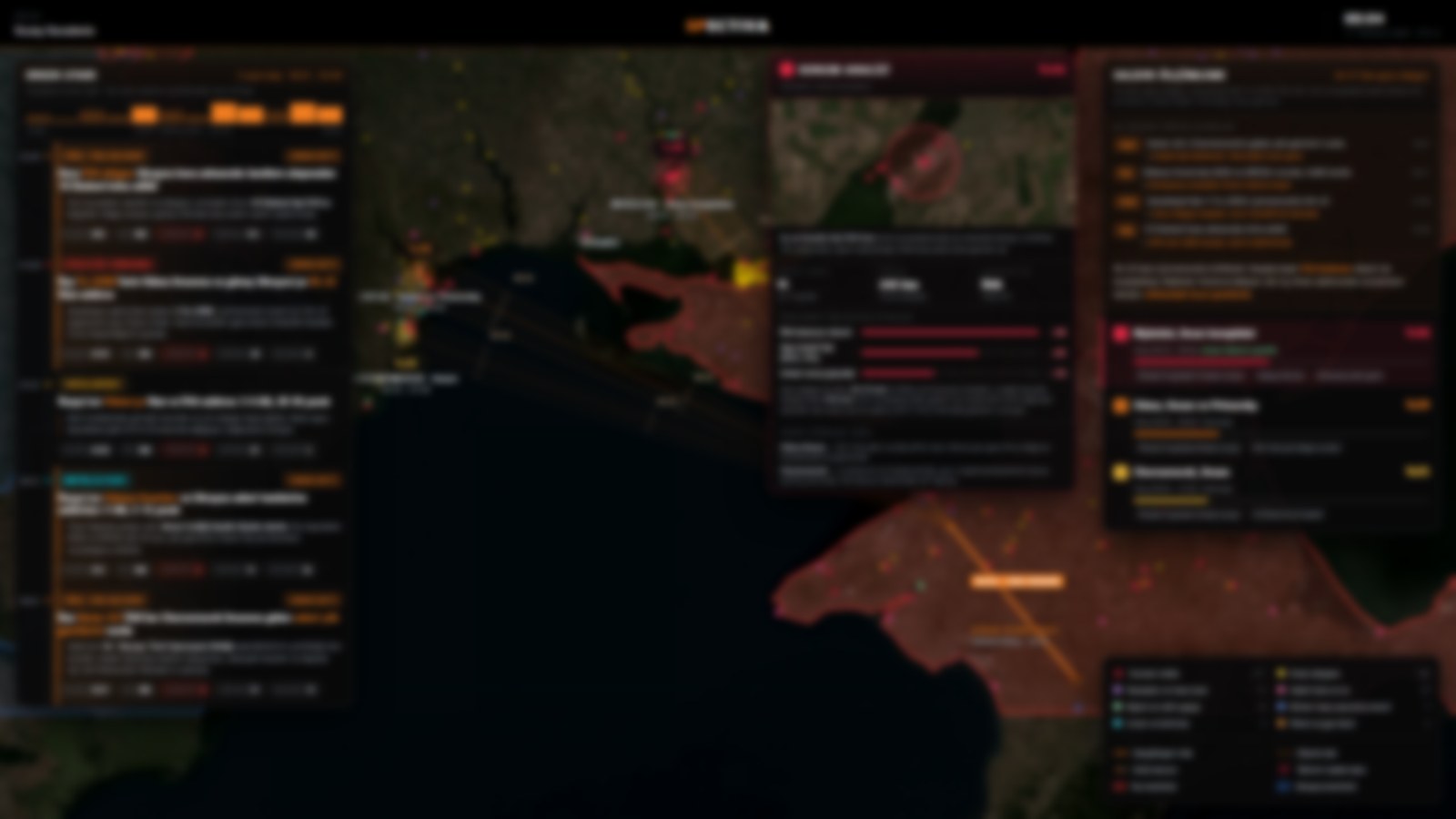
The ground stirs before the event
Major events are preceded by a large number of small signals, none of them meaningful on its own. A coherent picture emerges only when they are assessed together.
The prediction layer works on signals that have been tested in the early-warning line and turned into alerts. As alerts accumulate, the assessment is updated; a new alert can change what the current picture means.
The output is precise: the expected development and the projected time window.
It works at two scales
Near-term
For the minutes and hours ahead. A ranked list of candidates is produced from the accumulated alerts; each candidate is accompanied by a projected window of occurrence.
Macro
The macro scale monitors how events trigger one another. A strike does not merely remove a target; it shifts the strategic picture. Load moves elsewhere, criticality shifts with it, and the region's risk level is updated.
The two answer different questions: one asks what is next, the other asks what all of this has changed.
No prediction arrives without its grounds
A prediction appears on screen as a single line. Behind it sit the alerts that produced it and the current picture on the ground.
Every layer is open to inspection: the situation on the ground at that moment, the alerts that produced the prediction, and the content behind those alerts.
Every factor that sets the ranking has a counterpart on the map: where it is coming from, how far away it is, its strategic weight, what has happened there before.
The system does not put forward a single outcome. Possible developments are weighed against one another and ranked; the candidates that were ruled out remain visible with their grounds.